THE CURRENT PROTOTYPE
What Already Exists
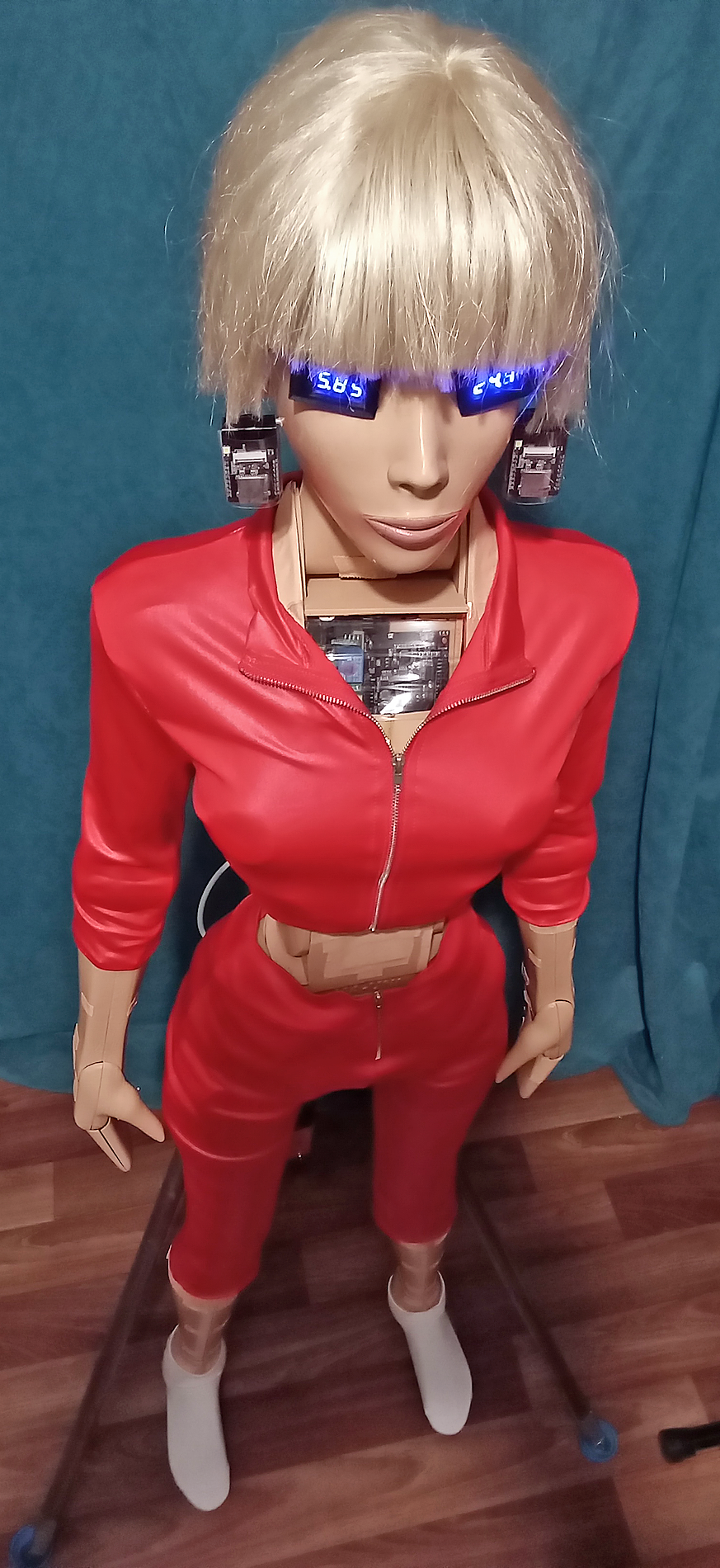
The current prototype already demonstrates the physical foundation of MA-UNI.
The prototype proves that the architecture exists physically.
The next stage is to engineer it professionally.
MA-UNI is an independently conceived, designed and physically built humanoid robotics platform developed in Bulgaria.
The project combines mechanical architecture, electronics, embedded control, digital fabrication and human-oriented industrial design into one integrated full-scale humanoid prototype.
Unlike a purely conceptual robotics project, MA-UNI has already crossed the boundary from concept to physical realization.
The current prototype already demonstrates the physical foundation of MA-UNI.
MA-UNI has been independently developed from the initial idea to a full-scale physical prototype.
The development includes concept creation, humanoid architecture, mechanical and structural engineering, electronics integration, software development, 3D modelling, fabrication, assembly, testing and industrial design.
| AREA | STATUS |
|---|---|
| Original humanoid concept | Completed |
| Full-scale physical prototype | Completed |
| Mechanical architecture | Completed |
| Electronics integration | Completed |
| Software control architecture | Completed |
| 3D structural fabrication | Completed |
| Project documentation | Completed |
MA-UNI explores a design-led approach to humanoid robotics in which mechanical architecture and human-oriented body design are developed as one integrated system.
| CONVENTIONAL APPROACH | MA-UNI APPROACH |
|---|---|
| Mechanical system first. Exterior later. | Human-oriented architecture developed together with the mechanical system. |
| Components remain visually dominant. | Components integrated into the body architecture. |
| Prototype optimized around exposed mechanics. | Prototype optimized around an integrated humanoid body structure. |
| Appearance follows engineering. | Engineering and appearance evolve together. |
The next development stage focuses on transforming the existing prototype into a professionally engineered robotics platform.
Priority areas include:
Development of the balance and control systems required for MA-UNI to stand upright independently and maintain a stable position without external support.
Development of stable movement control and the ability to perform controlled, consecutive steps while maintaining balance and a predictable walking pattern.
Integration of sensors and software capabilities enabling MA-UNI to perceive and interpret basic information about its immediate environment and orient itself within it.
Development of systems capable of detecting loss of balance and initiating appropriate responses. The longer-term objective is for MA-UNI to safely recover from a fall and return independently to an upright position.
Integration of balance, walking, environmental perception and recovery capabilities into a unified system supporting increasingly autonomous physical movement and interaction with the environment.
These milestones represent a gradual transition from a mechanically controlled humanoid platform toward a system capable of stable movement, basic environmental awareness and increasingly autonomous behaviour.
MA-UNI is not intended to become the fastest or strongest humanoid robot.
Its design objective is different:
MA-UNI is not looking for conventional engineering services.
The objective is to establish strategic partnerships capable of participating in the next stage of development.
Potential Partnership Roles:
| PARTNER | CONTRIBUTION |
|---|---|
| Robotics engineering organizations | Mechanical systems, controls, integration. |
| AI organizations | Perception, intelligence and autonomy. |
| Industrial engineering partners | Manufacturing and product engineering. |
| Research Institutions | Joint robotics R & D and validation. |
| Strategic Investors | Capital for team formation and engineering development. |
MA-UNI already exists as a physical humanoid robotics platform.
The next challenge is no longer proving the concept.
The next challenge is bringing together the engineering, industrial and strategic capabilities required to develop it further.
MA-UNI is an invitation to explore a strategic development opportunity.